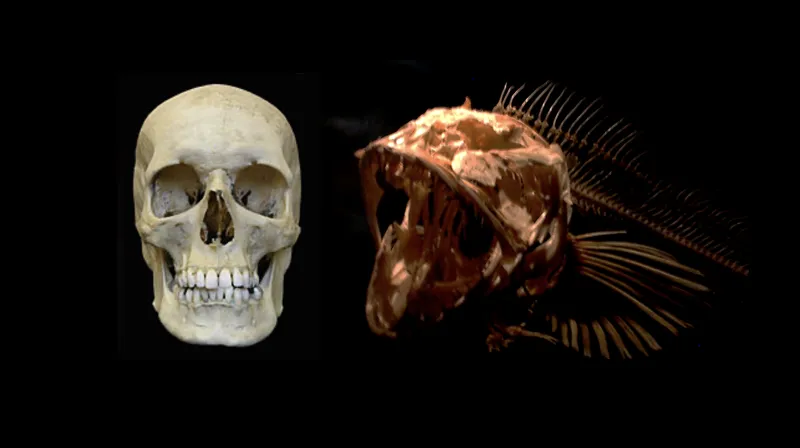
The formation of the skull requires the coordinated morphogenesis and growth of numerous structures during development. The fish skull is quite similar to our own. There are differences in pattern and functional adaptations, however the fundamental basis of skull patterning and growth are similar due to stemming from a similar structure in a common ancestor.
In efforts to understand the mechanisms underlying the generation of form, we extend analyses to the development of the skull, including skull roof and jaws. As the general skeletal elements and process of their formation ae shared among vertebrates, we can extend our findings to reveal processes regulating the formation of the skull in human development and underlying causes of disorders. We leverage both unique mutants having craniofacial phenotypes resembling human disorders, but also analysis of patients focusing on inappropriate fusion of the sutures (caniosynostosis), overall size (microcephaly), and proportion of the jaws (microsomia).
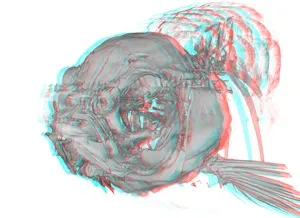
MicroCT 3D rendering of battering ram mutant. Use 3D glasses!
We are investigating the genes necessary for coordinated growth and patterning of the skull focusing on genes affecting late development. We are using the zebrafish as a means to functionally dissect the genetic regulation of proportional growth of the skull through forward mutagenesis screens and high-throughput modifier screens of mutants having altered growth and patterning of the skull.